


17% of the UK population were members of a gym in 2025, according to research by PureGym. That’s over 10 million people, and it’s still growing, year on year!
With the growing popularity of 24/7 gyms and the greater number of valuable personal belongings left unattended, it’s more important than ever to invest in robust and reliable gym security solutions.
In this article we talk about how you can use smart security technology in your fitness facility to keep your clients and their property safe, keep users happy, and even cut staffing costs.
Monitoring Entrances and Exits
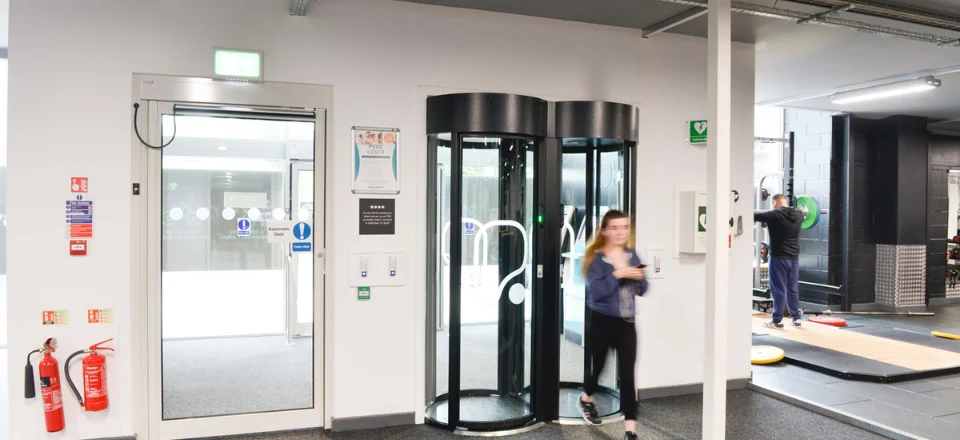
The first step in securing your site is making sure you know who is present at all times. Membership cards and turnstiles have been around for decades, but they have some big issues that are only getting more serious with time.
First, as the cost of living crisis is squeezing people’s wallets, the number of people borrowing membership cards is growing. This may be innocent enough, but it’s a problem for both gym finances and security. Multiple people using the same card means:
- More wear and tear on gym equipment for no increase in income.
- If a theft, vandalism or violence happens, there’s no way to know for sure who was present.
- If there is a fire or another emergency, you won’t know if everyone inside was evacuated safely.
On top of this, turnstiles can be bypassed by tailgating or being vaulted. If there’s no one on reception at the time, there might as well be no access controls at all. Plus, if your facility is open 24/7, keeping the desk manned at all times is expensive.
Video Verification
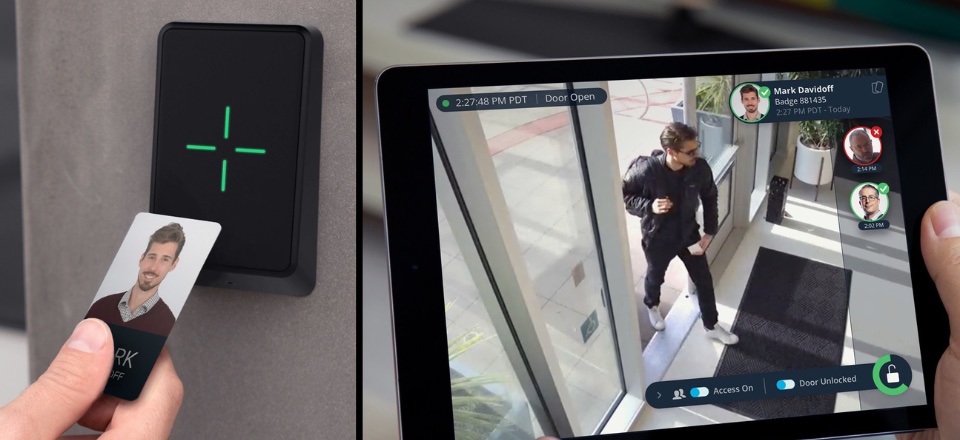
Rather than employing someone to sit at the front desk and ensure an access credential’s user matches their picture on file, why not use smart CCTV with facial recognition?
Using CCTV is much cheaper than employing a receptionist, and by integrating your surveillance and access control systems, every access event can be visually verified automatically. If the credential user doesn’t match the photo on the account, the door won’t open. Plus, with a record saved of every access event, you will always be able to track whether someone was present or not when an incident occurred.
Airlock/Cylinder Gates/Security Portals
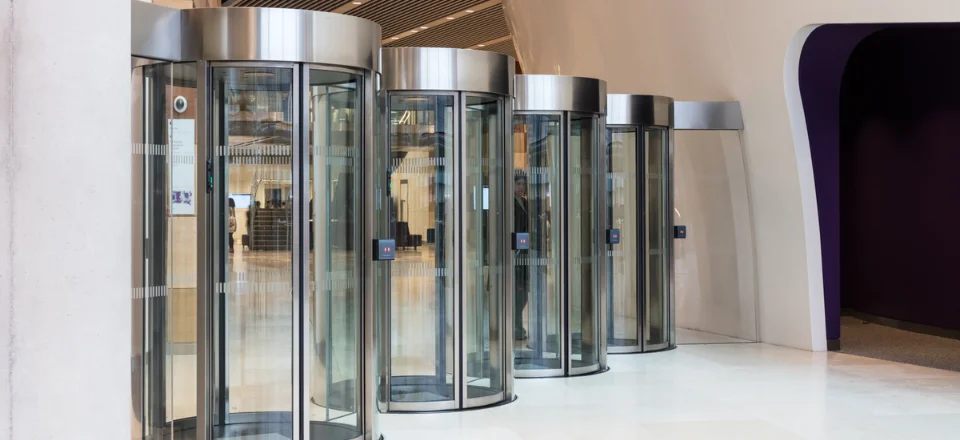
Many 24/7 gyms are now employing airlock or cylinder gates, also known as security portals, for entry and exit. These gates have two doors that open in opposite directions. They are interlocked so only one person can pass through at a time.
These gates are perfect for stopping tailgating and vaulting. They’re small enough that only one person at a time can fit easily, and they can detect if there are two people in there at once. Plus, since they’re floor-to-ceiling, they can’t be bypassed physically.
Finally, as a nice side-effect, airlocks also help with climate control in the gym by limiting the flow of air into and out of the building.
Advanced Access Credentials
Traditional access credentials like key fobs and keycards can be lost, stolen, shared or cloned. Without secondary authentication (like video verification, or a manned reception desk), you can’t be sure the right person is using the credential. Plus, for larger gyms printing keycards for every user is expensive, especially when missing cards need to be replaced.
Biometric and mobile credentials are more secure and less likely to be lost, and neither needs to be printed.
Biometric Credentials
Biometrics are elements about your body that are unique to you, like your face, fingerprints or iris. They make incredibly secure access credentials because they can’t be lost, cloned or shared, and stealing them is extremely difficult (not to mention illegal). If a user gains access to the gym with a biometric credential, you can be certain they have a membership.
Mobile Credentials
The only drawback to biometric credentials is setup time, as users need to have their fingerprints/irises/face scanned to save as credentials. This isn’t a problem for mobile credentials. A user simply downloads a secure app and a code is sent to it so the phone can be used as an access credential.
Smartphones’ own authentication systems also mean a stolen phone can’t easily be used to gain access to the gym. Because the phone won’t recognise the thief’s face or fingerprint, and they won’t know the PIN code or unlock pattern, the gym app will be inaccessible.
Unique PIN Codes
Unique PIN codes for each user is another option used by several large gym groups like Gym Group and PureGym. While this does open up the possibility that users may share codes with others, the gym’s CCTV is monitored constantly, and anyone found to be sharing their code may have additional charges added to their bill, or find their account banned.
Occupancy Control
CCTV and Access Control systems can also be used to monitor occupancy levels. If the CCTV system sees that the gym is getting too crowded (either for fire safety or just for the available weights and machines), it can tell the access control system to stop anyone else from entering until some users have left.
Remote CCTV Monitoring
For 24/7 gyms, employing staff round-the-clock can be a major cost. One approach that many 24-hour gyms are employing is to have the entire premises remotely monitored by CCTV instead.
The signal from the gym’s security cameras is sent to a remote monitoring centre, where trained CCTV operators will review the feed. The CCTV monitoring team can communicate with the gym’s occupants via the sound system, and can be contacted through emergency call points if necessary.
The cost of this remote monitoring is miniscule when compared to having the gym staffed round-the-clock, and with little-to-no reduction in quality of service.
Environmental Sensors
Keeping your members safe isn’t just about more than preventing physical harm. Maintaining a suitable environment for working out is just as important. If the gym gets too warm, users doing strenuous exercise can suffer heat stroke or exhaustion. Too cold, and there’s an increased risk of injury.
In a stuffy gym with lots of people exercising heavily, CO2 levels can also rise dangerously. This can lead to headaches, dizziness, fatigue and nausea, and even difficulty breathing for those with asthma.
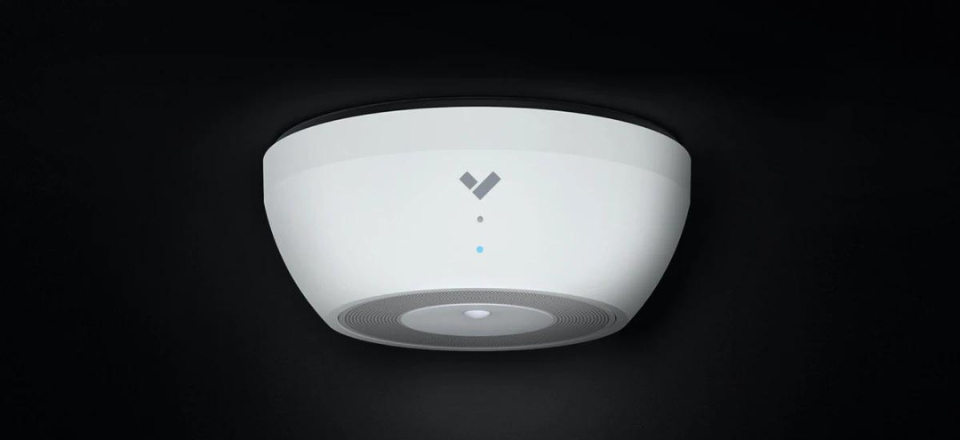
Environmental sensors can detect changes in temperature and CO2 levels in a space, as well as a number of other parameters. If any of these rise above or fall below acceptable levels, your sensor can tell the ventilation system to turn on.
Environmental sensors can also detect vaping and send a notification to your CCTV system to record the person responsible so you can issue a warning.
Secure Lockers
Fewer people carry cash these days, and it’s easy to forget or lose padlocks. This leads to members storing belongings in unsecured lockers where they can be easily stolen. Traditional padlocks can also be picked by thieves with the right know-how.
Even with signs saying that the gym is not liable for items left in lockers, a string of thefts can still damage your reputation, and potentially make members move elsewhere.
Electronic lockers that can be operated using a phone, smart watch or PIN linked to gym membership give users secure storage, without needing to remember cash or a padlock. This can also help gym staff return items left in the locker overnight to their correct owner, as the securing system is linked to the user’s membership.
Final Thoughts on Gym Security
As the fitness industry evolves, the security measures it uses to protect clients and their property should too. These technologies don’t just increase security but also create a positive and safe environment for gym goers.
At Chris Lewis, we have been creating reliable, large-scale security solutions for over 30 years. Our expert team of security professionals can design and install systems that are completely tailored to your needs.
If you’d like to learn more about how we can help keep your site, staff and customers safe, simply fill in the form below and we will be in touch.
