


Managing a mishmash of access control systems at different sites can be a huge headache for security teams. Data silos, inconsistent security and slowed response times aren’t just inconvenient – they’re a huge safety risk.
Thankfully, there’s a solution: enterprise access control.
We’re The Chris Lewis Group, a Fire and Security system installer based in the South of England. For over three decades, we’ve created state-of-the-art security systems for world-famous universities, cutting-edge research sites, and global business HQs. Our engineers use advanced security systems to create setups that are simple to use, and incredibly effective at the same time.
In this blog, we explain what Enterprise Access Control (EAC) is, its benefits, and whether it’s a good choice for your company.
What Is Enterprise Access Control?
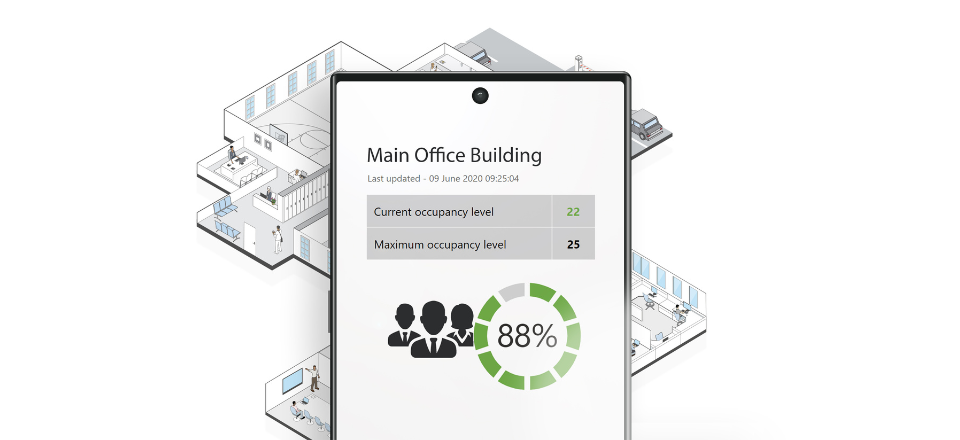
Enterprise access control (or enterprise door access control) systems are large access management solutions that govern entry points across multiple sites. Imagine controlling access to your office in a different city, or even a different country, as easily as deciding who can get into the room next door. That’s enterprise access control.
What Makes Enterprise Access Control Different from a Standard Access Control System?
The main difference between an enterprise access control system and a non-enterprise setup is scale. A standard access control system is designed to grant or deny access for a single building or site, and that’s typically its only purpose.
As systems get more advanced, other features are added, like CCTV, alarm and HR software integration, remote access and push notifications for errors or unauthorised access attempts. However, most of these systems are still limited to a single site. EAC can manage access across every site your business owns. It can even manage thousands or tens of thousands of entry points. The management of all these entry points is centralised, and with each employee at the company given their own unique credential, the system can track who has entered what area, at what time, across the entire organisation.
By integrating with other security technologies, like video surveillance and intrusion detection systems, enterprise access control gives you a comprehensive security solution that spans every site.
For a larger business, a single enterprise access control system is much more effective than several standard access control systems in a number of ways:
- Having a centralised view of all access points makes monitoring and managing security a much easier process.
- A single enterprise access control system can create and manage access policies for all users, improving security and compliance.
- A single enterprise access control system is easier to integrate with other security systems, like CCTV and intruder alarms, as well as HR software.
What’s the Difference Between Enterprise Access Control and Cloud Access Control?
Cloud access control is a catch-all term covering any access control system that can be managed through the cloud. That’s everything from a small system that only controls a few doors, or one site, all the way up to a fully-integrated, multi-site setup. All the name means is the hardware and software that control the system are stored in the cloud, not an on-site server.
Not all Cloud access control systems can handle enterprise-scale operations, and not all enterprise access control systems are cloud-based (though most are). However, if you want to maximise your security, avoid single points of failure in your system, and optimise your cash flow, we would recommend a cloud-based access control system. For more information on the difference between cloud-based and on-premise access control systems, you can read our blog on the subject: “The Benefits of Cloud-Based Access Control”.
Is an Enterprise Access Control System Right for Your Business?
Choosing to switch to an enterprise access control system is a big decision, due to the cost of installation, but in the long-run, the benefits can be huge. Many rapidly growing organisations will have a range of different access control systems across their sites. Some may have been inherited from the last company that used the space. Others could have been installed when the business first took over the office.
When a business is expanding, security is usually lower in the pecking order for budget. Hiring new staff, buying more equipment and making sure the rent is covered are the main priorities. Lots of businesses look at upgraded access control as a luxury – especially if they’ve never had a costly security breach before. As time goes on, these disparate systems can lead to some big problems. Poor efficiency, limited reporting and security standards that change from site to site.
Still unsure if enterprise access control is right for your business? Choosing to upgrade may be unnecessary for some companies, and completely transformative for others. Here’s a list of key questions to ask yourself before going any further:
How Many Doors or Access Points Do You Currently Manage?
If your site only has a few access points, switching to an enterprise access control system may be premature. EAC is best used to make managing a large number of entry points and doors over several sites easy and cost-effective.
Likewise, if managing access for your staff numbers isn’t a problem, an enterprise level system may be excessive. You may still be able to achieve a good level of security with your current system. This cuts out any hassle from installing a new door access control setup, and the money you save could be spent on other areas of your security, like CCTV or intruder alarms.
Do You Have Multiple Locations or Plans to Expand in the Future?
If you have multiple sites, or are thinking about expanding soon, upgrading to enterprise access control could be a very savvy choice. One of the main points in favour of EAC is that it gives you one unified platform you can use to manage access at all your sites.
It’s also highly scalable. By upgrading to enterprise access control, you get a system that will grow alongside your company as it expands, regionally or globally.
Could an Employee Easily Visit Another Site, or Would They Need a Visitor Pass?
By unifying your access control with EAC, you can standardise credentials and user access permissions across your organisation. If a new employee joins at one site, they can be automatically added to the system at all locations. That means no need to create and print visitor passes for your own staff if they visit other sites. Their credentials are already on the system.
Role-Based Access Control can also apply across all locations. Two people in the same role at different sites can be automatically given the exact same access permissions. Or, if you want to stop – say – a branch manager from one location walking into the back room at another site, you can modify access permissions according to a staff member’s main place of work.
If someone leaves the company, with enterprise access control, they can be automatically removed from the system at every site, simultaneously. With separate setups, you’d need to tell administrators at each location that the person had left, then they’d have to remove the access permissions manually.
Could Someone Access One of Your Sites with a Stolen Credential?
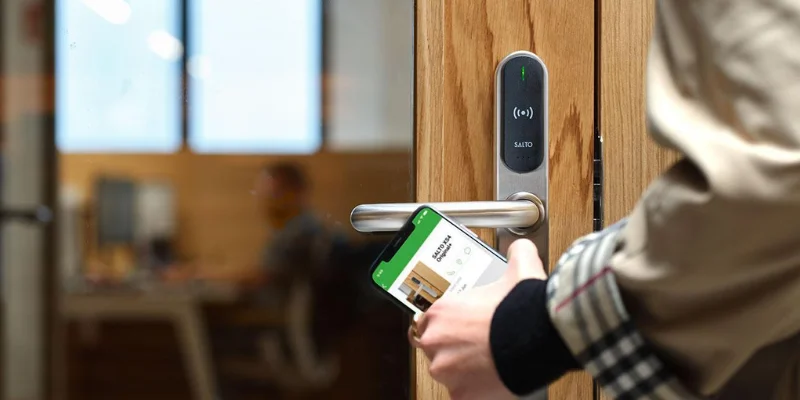
Older credential types like keycards and fobs can be lost, stolen or cloned – a major security risk. Enterprise access control systems can be set up to utilise a wide range of credentials that don’t have this flaw, including biometrics, mobile devices and multi-factor authentication (MFA).
These are considerably harder (if not impossible) to steal or fake, simple to set up, and can’t be easily lost, saving you the expense of printing replacements.
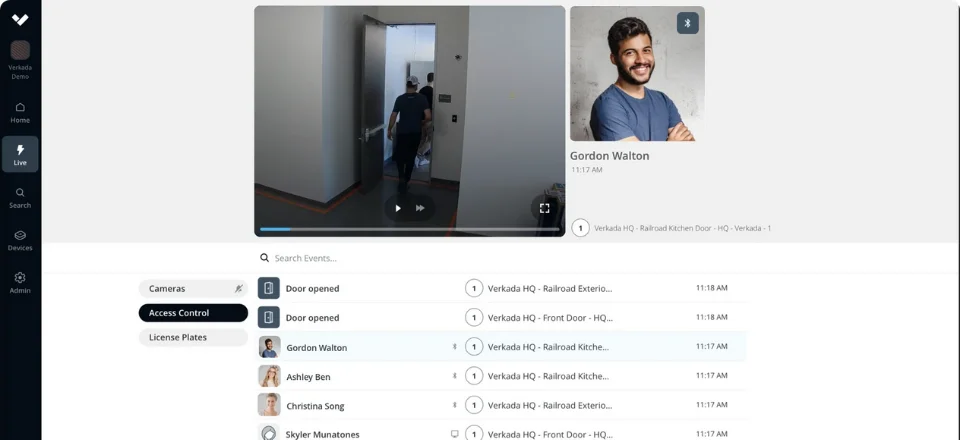
You can also integrate enterprise access control with your CCTV for added security. AI-powered facial recognition lets you visually verify access events to ensure anyone who gains access matches the credential they’re using. CCTV integration also lets you check on alerts from your access control system, so if tailgating is detected, or a door is forced open, you can see what is happening in real-time.
Can You Easily Tell if Someone at Another Site is in Today?
If an employee is in a different city but says they are going to work from that regional office, your options are no longer “take them at their word” or contacting the team at that site to make sure they actually came in.
With EAC, your access control can be integrated with your HR software, acting as an automatic roll call whenever someone enters the building. The HR system will log what time they arrived, and when they left.
Are You Concerned About Security Flaws in Your Current System(s)?
If you use different access control systems across your sites, you could be opening yourself up to a major security breach. If standards of security differ from site to site, criminals only have to exploit the vulnerabilities at a location with weaker protocols to put your people and assets in danger.
A less secure system at one site could become a weak point for your entire business. On top of this, with no centralised management system, there’s no way to easily tell if a similar breach has happened at any other site. Enterprise access control reduces these risks by standardising security levels across all sites.
There’s also cybersecurity to think about. A lot of smaller access control solutions use on-premise servers that run the system and record data like “who used what door at what time?” These servers are a single point of failure for the whole system. If they’re damaged or destroyed, it can take down your entire system.
EAC systems have all their data encrypted and stored on remote servers. The server will also keep an audit trail of everyone who has accessed their settings, so if it has been tampered with, you’ll know who did it.
How Expensive to Run Are Your Current Systems?
Managing lots of separate systems needs more staff than a single, centralised one, and each setup will have its own servers or cloud subscription plan. When added up, this can be far more expensive than a single enterprise access control system.
Plus, the more access control systems you have, the more things that can go wrong, and the more expensive repair callouts you’ll need.
Taking the Next Step with Enterprise Access Control
If EAC seems right for your business, we’re here to help. At The Chris Lewis Group, we know every business’s security needs are unique. Our team of experts can design and install an enterprise access control system that’s tailored to fit your exact needs.
We offer a free consultation and security assessment to help us grasp the challenges with your current setup. We will then recommend the most suitable solution for you, using cutting-edge technology from the most advanced security system manufacturers, including our trusted partners, like Verkada, Salto, Paxton, and Avigilon Alta.
Our experienced technicians will then design and install your access control system, while keeping disruptions to a minimum. We can also seamlessly integrate this new tech with your existing security systems and HR software. This gives you a holistic security setup, which you can also use to keep an eye on attendance and other HR tasks.
